CBD Gummies for Athletes — Beyond Post-Workout Recovery
- 20 Jul 2026

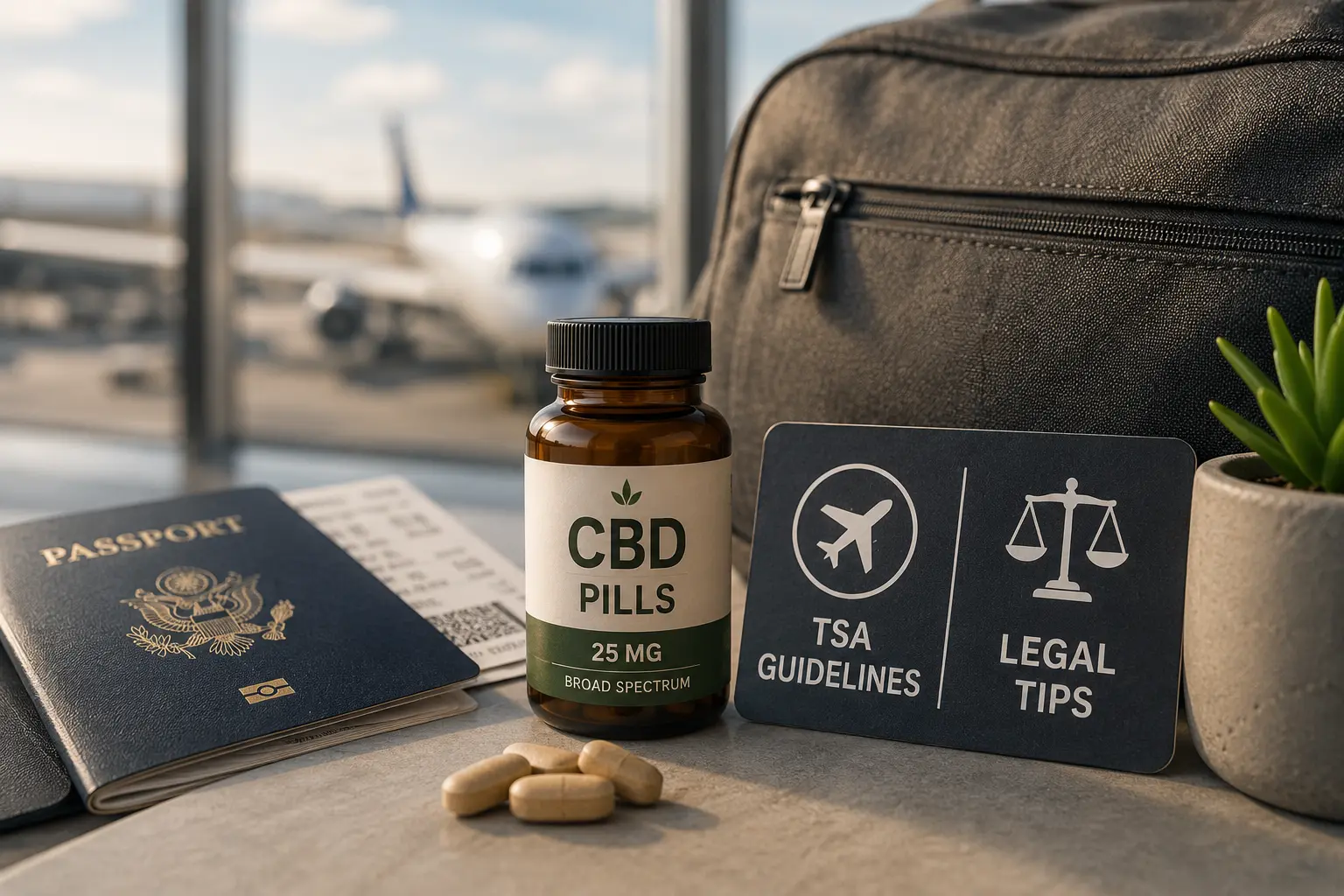
Traveling with wellness products has become increasingly common, and CBD pills are no exception. Whether you use cannabidiol (CBD) for relaxation, sleep, or general wellness, understanding the latest travel regulations is essential before packing your bags.
While hemp-derived CBD products are federally legal in many situations within the United States, airport security rules and destination laws can still create confusion. A simple mistake—such as carrying a product with excessive THC or traveling internationally without checking local laws—can lead to unnecessary delays or legal issues.
This guide explains everything you need to know about traveling with CBD pills in 2026, including TSA guidelines, legal considerations, packing tips, and common mistakes to avoid.
Yes, in most cases, you can travel with CBD pills on domestic flights within the United States, provided they comply with federal regulations.
According to the Transportation Security Administration (TSA), hemp-derived CBD products containing no more than 0.3% Delta-9 THC on a dry-weight basis are generally permitted in both carry-on and checked luggage. TSA officers focus on security threats rather than searching specifically for CBD products, but any item that appears to violate federal law may be referred to law enforcement.
However, legality doesn’t automatically mean you’ll have a hassle-free experience. Your destination state’s laws, airline policies, and international regulations may differ significantly.
If you’re flying within the United States, these TSA guidelines are important to remember:
CBD pills made from hemp and containing less than 0.3% THC are generally permitted under federal law.
Always carry CBD pills in their original packaging. Clearly labeled products are easier to identify during inspections and demonstrate compliance if questions arise.
Prescription CBD medications approved by the FDA are also permitted when traveling.
TSA officers are primarily looking for security threats. If they discover a CBD product that appears questionable or exceeds federal THC limits, they may involve local law enforcement for further evaluation.
Traveling within the United States is generally straightforward if your CBD pills:
Keep in mind that state regulations can vary. Some states have stricter rules regarding hemp-derived cannabinoids.
International travel is much more complicated.
Many countries either heavily regulate or completely prohibit CBD products, regardless of THC content. Even THC-free CBD may be considered illegal in certain destinations.
Before traveling abroad, research your destination country’s customs and drug regulations. Never assume that U.S. laws apply internationally.
Although not mandatory, having supporting documentation can be helpful.
Consider carrying:
These documents can demonstrate that your CBD pills meet federal hemp requirements.
CBD pills are generally suitable for either carry-on or checked baggage since capsules aren’t subject to liquid restrictions.
Many travelers prefer carrying them in their carry-on luggage for convenience during longer flights.
Homemade or unlabeled CBD capsules can create unnecessary confusion during airport screening.
Commercially packaged products from reputable manufacturers are much easier to identify.
Products exceeding the legal THC limit may violate federal law and create significant legal problems.
Always verify THC content before traveling.
One of the biggest mistakes is assuming CBD is universally accepted.
Several countries maintain strict cannabis laws that include CBD products.
Keep hemp-derived CBD separate from marijuana products.
If both are found together, distinguishing between them during inspection may become more difficult.
Although TSA permits compliant CBD products, airlines may have additional rules regarding cannabinoid products.
Review your airline’s policies before departure.
If you frequently travel, consider these factors when purchasing CBD capsules:
Travel-friendly products reduce uncertainty during airport screening and make compliance easier.
For many travelers, yes.
CBD pills offer several advantages over oils:
These benefits make capsules one of the most travel-friendly CBD formats available.
CBD laws continue evolving at both federal and state levels.
Before every trip, verify:
For the latest official information, review the TSA’s “What Can I Bring?”, which provides updated guidance on permitted travel items.
Yes. Hemp-derived CBD pills containing no more than 0.3% THC are generally allowed in carry-on luggage for domestic U.S. travel.
Generally, no. If your product complies with federal regulations and appears properly labeled, confiscation is unlikely.
Possibly, but many countries prohibit or strictly regulate CBD. Always research destination laws before departure.
While not required, carrying a Certificate of Analysis (COA) can help verify THC compliance if questions arise.
Traveling with CBD pills in 2026 is easier than ever—provided you understand the rules. For domestic U.S. flights, hemp-derived CBD products containing no more than 0.3% THC are generally permitted under TSA guidelines. However, travelers should remain aware of varying state laws, airline policies, and international regulations.
By keeping your CBD pills in their original packaging, choosing reputable products, and checking the latest legal requirements before every trip, you can avoid unnecessary complications and enjoy a smoother travel experience.